Alerts
Alerts are produced by monitors. Every time a monitor detects a problem in one of your queues, or in the Redis instance itself, it triggers an alert. Alerts can be found on the "Alerts" tab in your connection dialog.
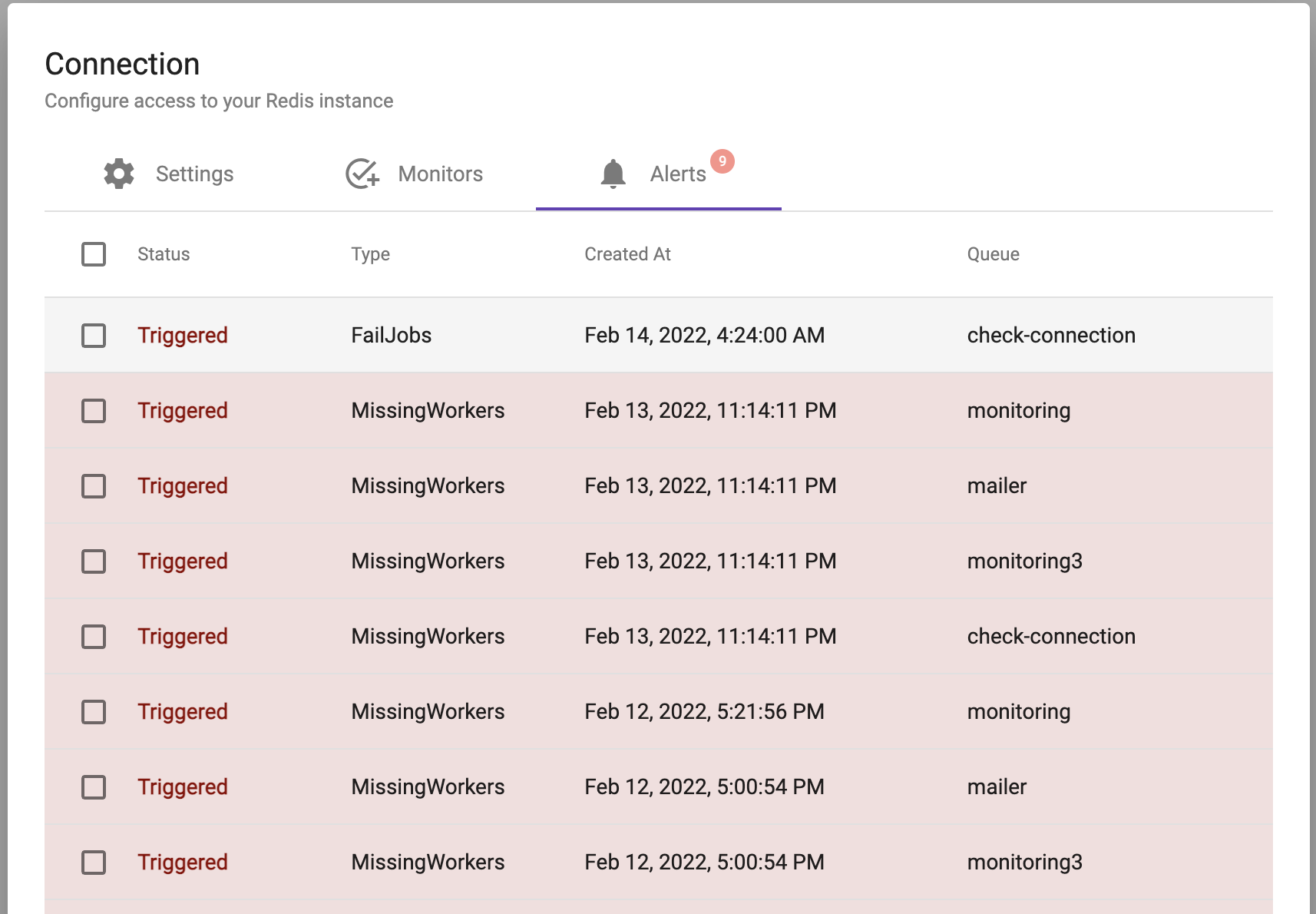
Each alert shows its status, the monitor that triggered it, when it was created and the queue it belongs to. Alerts that affect the whole Redis instance, such as the ones from the connection monitor and the max memory monitor, are not tied to any particular queue.
You can expand an alert to see more details, such as the message from the monitor explaining why the alert was triggered. Alerts from the failed jobs monitor also include the id of the job that failed, when it failed and its stack trace, so you can often find out what went wrong without leaving the alert.
Notifications
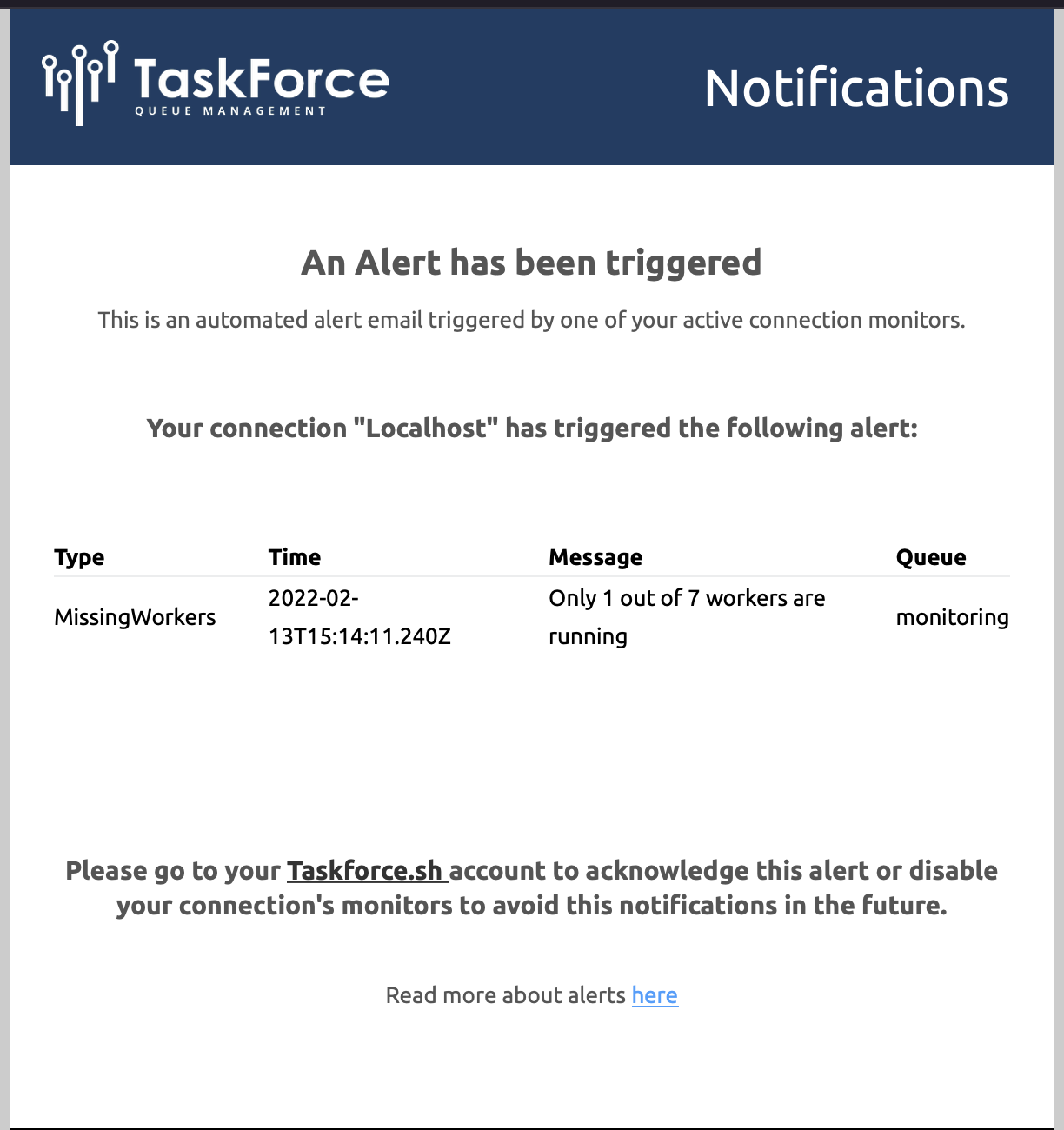
When alerts are triggered, a notification is sent to the channels enabled for the connection, for example an email to the owner of the connection, a Slack message or a PagerDuty incident. If several alerts are triggered at the same time in the same connection, they are sent together in a single notification. See Enable notifications for how to set up the channels.
Acknowledging alerts
A triggered alert stays in the "Triggered" status until somebody acknowledges it. To acknowledge alerts, select them in the alerts table and click on "Acknowledge", or click on "Acknowledge All" to acknowledge every triggered alert in the connection at once.
Most alerts require manual acknowledgement before a given monitor type will produce new alerts for the same queue, so it is advised to investigate as soon as possible why the alert was triggered and correct any issues before the alert is acknowledged. If an alert is not acknowledged, the monitor will report the problem again after a day has passed, so problems that are left unattended will not be forgotten.
This behaviour is there to avoid flooding you with notifications. For example, when something goes wrong it is common that many jobs fail at the same time, and you would not want to get one alert for each of them.
INFO
Queue-specific alerts are triggered per queue, so if several queues have problems you will have one triggered alert for each of them, and you can acknowledge them separately.