Jobs
The Jobs tab of a queue lists the jobs in the queue and the ones your workers have already processed. From here you can find a specific job, see why it failed, and retry, promote, edit or remove jobs one at a time or in bulk.
Job states
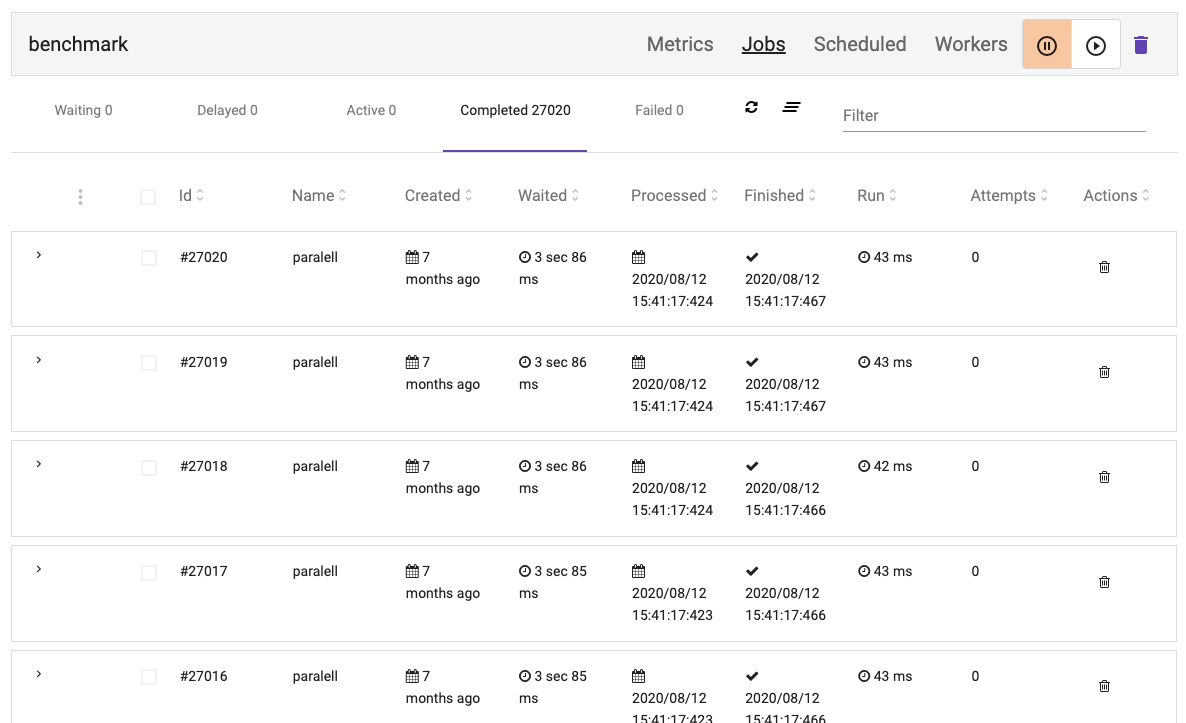
Jobs are grouped by state, with one tab per state and the number of jobs in it:
| Tab | Jobs that are |
|---|---|
| Waiting-Children | Parents in a flow, waiting for their children to complete |
| Waiting | Ready to be picked up by a worker |
| Prioritized | Waiting, but ordered by their priority |
| Delayed | Scheduled to run later, or waiting before their next retry |
| Active | Being processed by a worker right now |
| Completed | Processed successfully |
| Failed | Processing failed and no retry attempts are left |
Waiting-Children and Prioritized are only shown for BullMQ and BullMQ Pro queues, since Bull (v3) doesn't have those states.
Turn on Hide Empty Statuses to show only the states that have jobs in them. Taskforce.sh remembers this choice in your browser.
Search jobs
Use the Filter box above the tabs to search the jobs in the current state by name or by data. A search returns at most 100 jobs, so make it specific when the state holds many jobs. Click the cross in the box to clear it.
The jobs table
The table shows each job's ID and name, when it was created, how long it waited before a worker picked it up, when it was processed and finished, how long it took to run, its progress and how many attempts were made. The columns depend on the state: for example, the Prioritized tab adds the job's priority and the Delayed tab its delay. Hover over a time to see the exact date.
Job details
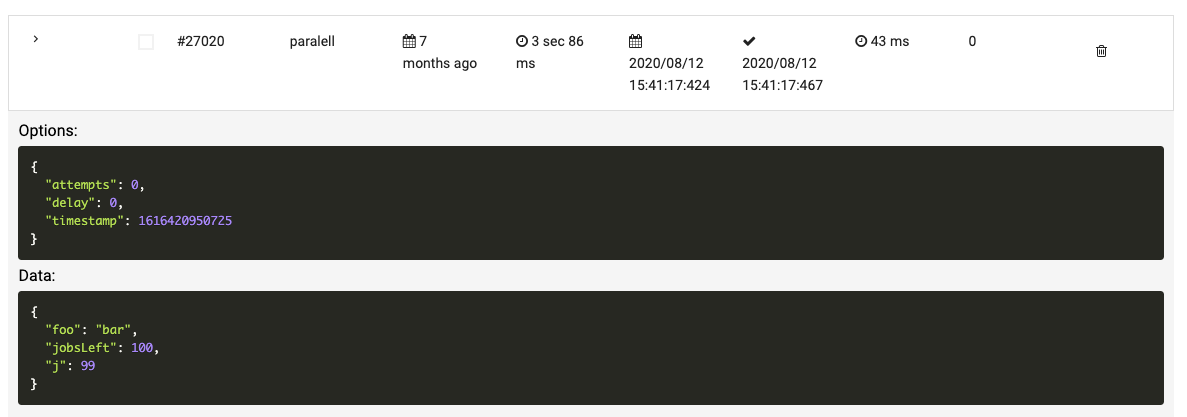
Click the arrow at the start of a row to expand the job and see:
- its options, such as attempts, backoff, delay and priority
- its data
- the value it returned, once completed
- the failed reason and stack trace, if it failed
- its logs, the lines your worker added with
job.log() - its children, for parents in the Waiting-Children tab
Act on a single job
Each row has buttons for the actions that make sense for the job's state:
| Action | Available for |
|---|---|
| Remove | All states |
| Retry | Failed jobs, and completed jobs on connections that support it |
| Promote | Delayed jobs, to run them now instead of waiting |
| Edit | Waiting, prioritized, delayed, failed and completed jobs |
| View Flow | Jobs that are part of a flow, see Flows |
A common use is to retry failed jobs once you've fixed the reason they failed.
Edit a job's data
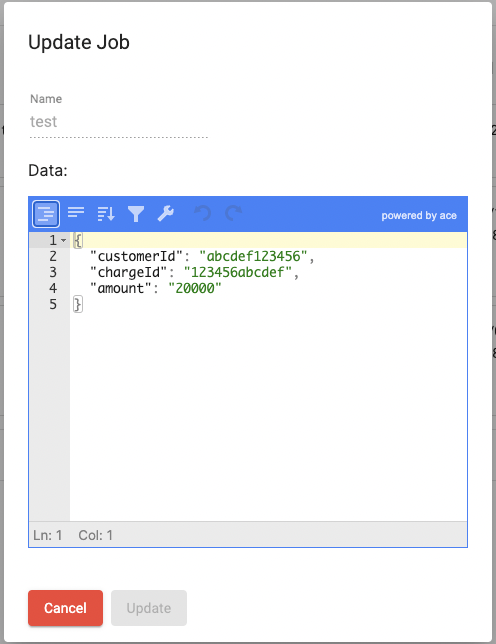
Click the Edit icon to open the update dialog:

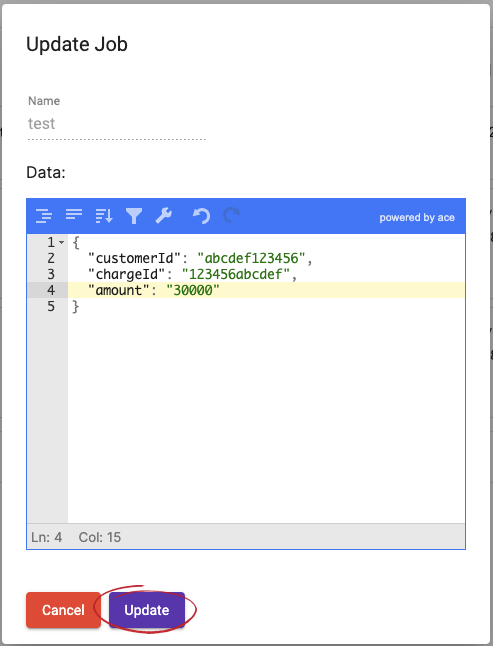
Change the data as JSON and click Update:
INFO
Editing jobs and adding jobs need a direct Redis connection or version 1.15.0 or later of the Taskforce connector.
Act on many jobs
Select jobs with the checkboxes in the table, then open the menu in the table header (the three dots) to Remove, Retry (failed and, where supported, completed jobs) or Promote (delayed jobs) all the selected jobs at once.
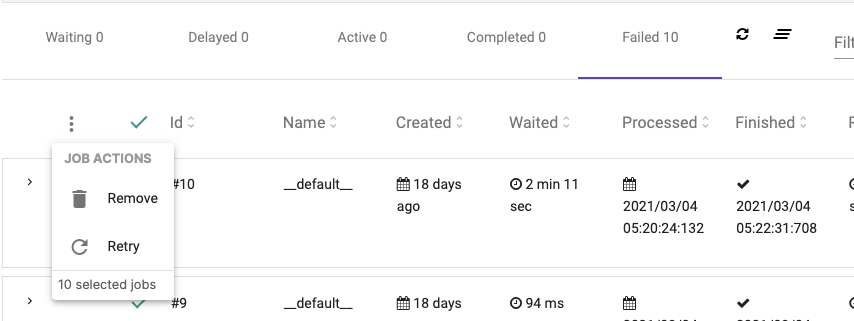
The buttons above the tabs act on every job in the current state:
- Clean removes all the jobs in the state. It isn't available for active jobs.
- Retry all retries every failed job, or every completed job on connections that support it. In the Delayed tab of a BullMQ queue, it promotes every delayed job instead.
WARNING
Removing and cleaning jobs can't be undone.
Permissions
What you can do in this tab depends on your role on the queue's team. For example, a role without the retry permission sees the retry buttons disabled. See Organizations and Custom roles to change what each member can do.